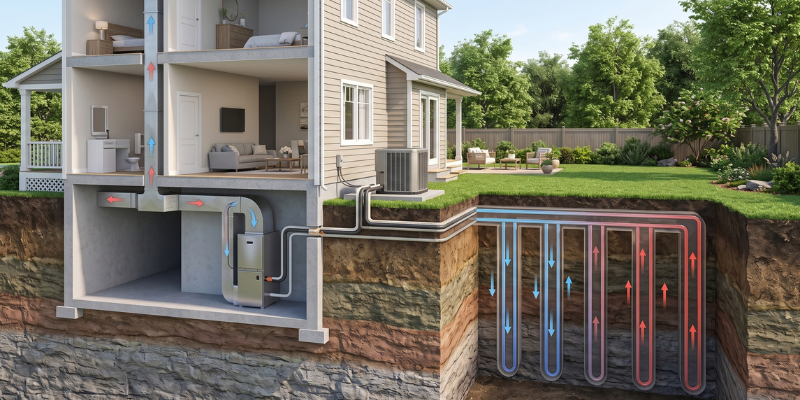
When your geothermal AC isn’t cooling, the house warms up fast, especially in the middle of a July heat wave. The good news is that most cooling problems in a geothermal unit come down to a handful of causes, and some of them you can check yourself in a few minutes.
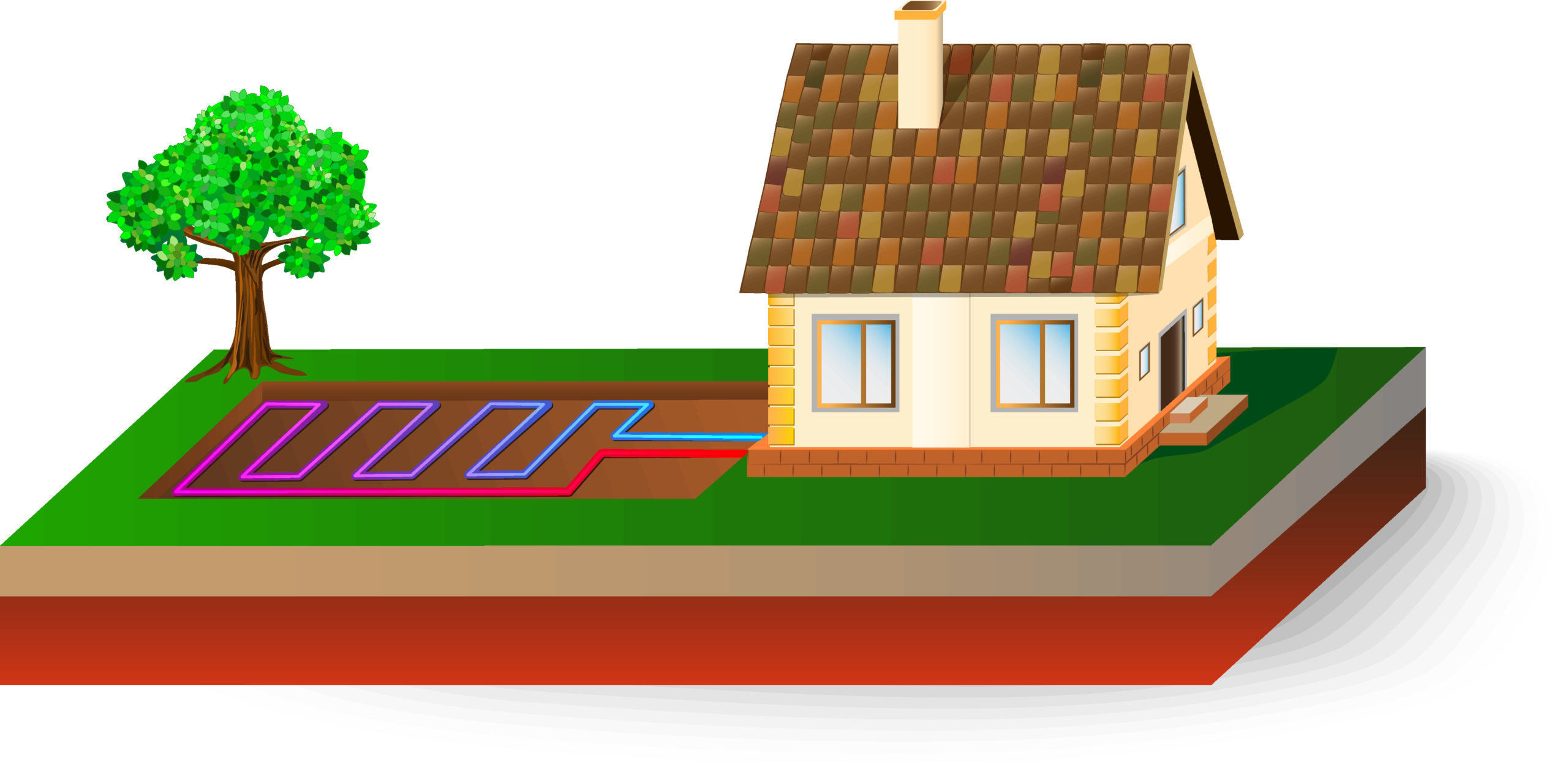
A geothermal heat pump cools your home by pulling heat out of the indoor air and sending it into the ground through a buried loop. If anything interrupts that cycle, like the airflow inside, the refrigerant circuit, or the fluid moving through the ground loop — cooling output drops. Below are the seven most common reasons a geothermal heat pump is not cooling, plus what you can safely check and when to call a technician.
Key Takeaways
- Most geothermal cooling problems come from one of three areas: airflow inside the home, the refrigerant circuit, or fluid flow through the ground loop.
- Start with the easy fixes. Check the thermostat settings, replace a dirty air filter, and make sure vents and returns aren’t blocked.
- Geothermal systems use refrigerant in a sealed circuit, so low refrigerant always means there’s a leak that needs professional repair.
- A system that drifts a few degrees during a heat wave is often normal. If it can’t keep up on moderate days, something needs attention.
- Ice on the lines, repeated lockouts or warm air from the vents are signs to call a ClimateCare expert technician.
7 Reasons Your Geothermal AC Isn’t Cooling
1. Dirty Air Filter or Blocked Airflow
This is the most common cause, and the easiest to fix. A clogged filter restricts the air moving across the indoor coil, so less heat gets removed from your home. Severely restricted airflow can even cause the coil to freeze, which cuts cooling further.
Check the filter and replace it if it looks grey or dusty. Also make sure supply vents and return grilles aren’t closed or blocked by furniture. Better air filtration and regular duct cleaning help keep airflow steady all season.
2. Thermostat Settings or a Faulty Thermostat
Before assuming the worst, confirm the thermostat is set to Cool, the setpoint is below the room temperature, and the fan is set to Auto. A thermostat that is miswired, has dead batteries, or sits in direct sun can send the wrong signals and leave your system running in the wrong mode or not at all. If it’s an older model, upgrading to a smart thermostat set up for your geothermal system allows for more control of your home comfort while preventing any repeat issues
3. Problems With the Ground Loop
In cooling mode, your system rejects the heat from your home into the ground through fluid circulating in the loop. If that fluid isn’t moving properly, the heat has nowhere to go. Loop problems often show up as a system that runs but delivers weak cooling, or one that shuts itself off on a high-pressure fault. These need a technician with the right gauges to diagnose. Common loop issues include:
- Low loop pressure or a leak in a closed loop
- A failing flow centre pump
- Air trapped in the loop
- An antifreeze mix that is out of balance
- Low well water flow or mineral scaling in an open-loop system
4. Low Refrigerant or a Refrigerant Leak
Yes, geothermal units use refrigerant. It runs in a sealed circuit inside the heat pump and is what actually absorbs heat from your indoor air. Because the circuit is sealed at the factory, refrigerant doesn’t get “used up.” If the charge is low, there is a leak. Signs include weak cooling, ice on the refrigerant lines, or a hissing sound. A licensed technician needs to find and repair the leak, then recharge the system.
5. Compressor Problems
The compressor pressurizes and circulates the refrigerant, so it’s the heart of the system. A failing compressor, start capacitor or contactor can leave your unit running with little or no cooling, cycling on and off, or not starting at all. Compressor diagnosis and repair is a job for a professional.
6. Blower Motor or Reversing Valve Issues
The blower moves air across the indoor coil and through your ducts. If the motor is weak or failing, you’ll notice low airflow from the vents even when the system is running.
The reversing valve switches the heat pump between heating and cooling. If it sticks, your geothermal system can run in the wrong mode and blow warm air when you’ve asked for cool. A technician can test the valve and its solenoid.
7. A System That Can’t Keep up on the Hottest Days
If your geothermal cooling is not keeping up only during heat waves, the system may simply be at its limit. Most systems are designed to hold a comfortable temperature on a typical hot day, not the hottest day of the decade. A few degrees of drift during an extreme stretch can be normal.
If it struggles even on moderate days, the cause could be a system that was undersized for your home, an undersized ground loop, an aging unit, or leaky ductwork losing cool air in the attic or walls. A load calculation and system inspection will tell you which.
Geothermal Not Blowing Cold Air? Quick Checks Before You Call
If your geothermal unit is not cooling your house, run through these checks first. They’re safe for homeowners and solve a surprising number of service calls.
- Confirm the thermostat is on Cool, the setpoint is a few degrees below room temperature, and the fan is on Auto.
- Replace the air filter if it’s dirty.
- Open all supply vents and clear anything blocking the return grilles.
- Check the breaker panel for a tripped breaker on the heat pump or flow centre.
- Look for a fault or lockout light on the unit. Many systems lock out to protect themselves. Turning the power off and back on once can reset it, but if it locks out again, call a technician rather than resetting it repeatedly.
- Feel the air at a supply vent after the system has run for 15 minutes. It should feel noticeably cool, not room temperature.
If none of these restore cooling, the problem is likely inside the unit or the ground loop.
When to Call a Geothermal Repair Technician
Call a professional if you notice any of the following:
- Ice on the refrigerant lines or indoor coil
- The system runs constantly but the house keeps getting warmer
- Repeated lockouts or error codes
- Warm air from the vents in cooling mode
- Unusual noises, such as grinding, banging or hissing
- Low pressure readings or visible leaks at the flow centre
Geothermal systems need technicians trained on both the refrigerant circuit and the ground loop. Your local ClimateCare team handles heat pump repairs for geothermal systems, and a yearly heat pump maintenance plan helps catch loop pressure, refrigerant and airflow issues before the hot weather arrives.
Geothermal Cooling FAQs
Can a ground source heat pump cool a house?
Yes. A ground source (geothermal) heat pump heats in winter and cools in summer with the same unit. In cooling mode it moves heat from your home into the ground, which stays at a fairly steady temperature year-round. Because the ground is cooler than summer air, geothermal cooling is typically more efficient than a conventional air conditioner.
Do geothermal systems use refrigerant?
Yes. The fluid in the ground loop is usually water or a water-antifreeze mix, but the heat pump itself uses refrigerant in a sealed circuit, much like an air conditioner. A properly installed system shouldn’t need refrigerant topped up. Low refrigerant means there’s a leak to repair.
Why is my geothermal cooling not keeping up?
On the hottest days of the year, a properly sized system may run continuously and still drift a few degrees above the setpoint. That’s usually normal. If it can’t keep up on moderate days, the most common causes are a dirty filter, ground loop flow problems, low refrigerant, leaky ductwork or a system that’s undersized for the home.
How cold should the air from a geothermal system be?
As a rule of thumb, air coming out of the supply vents should be roughly 8–11°C cooler than the air going into the return. A much smaller difference points to an airflow, refrigerant or ground loop problem worth having checked.
Get Your Geothermal System Cooling Again
Is your geothermal system not keeping you cool? Don’t wait out the heat. ClimateCare’s local member companies install, maintain and repair geothermal systems across Ontario and Atlantic Canada. Contact your nearest ClimateCare to book a geothermal repair or tune-up.