Our bodies are constantly engaged in a temperature balancing act. If the temperature inside your body drops about 10 degrees, you’re in trouble. But you only have about 3 degrees Celsius on the other end, the overheating end, before things get dire.
Here’s exactly what overheating does to your body (and why you need to keep your air conditioner in good shape so you don’t have to go without this summer).
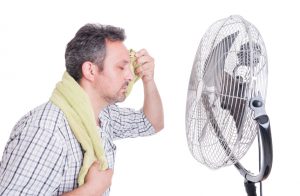 It’s just a little warm
A few family members are over for a big dinner. You’re packed into the dining room and it’s a bit warm.
Your body temperature has bumped up to 37.5 or 37.8 degrees Celsius, and your body responds with two things:
- Your skin gets flushed. Your body is venting the heat through the blood vessels , and that results in a little redness.
- You start sweating. Your body is transferring heat from inside to outside via drops of water, sodium, calcium, potassium, magnesium and more. As the sweat hits the air and evaporates, so does the heat from inside.
Getting hotter
At around 38.5 degrees Celsius you’re starting to suffer.
Your skin can be hot to the touch, but you probably don’t have enough liquids in your body to sweat it out.
Because your temperature is abnormally high, your body has pushed as much blood to the surface of the skin as it can. It’s all your body knows to do, and it can work at times, but it also causes your blood to lose water through evaporation. Thicker blood increases your chances of stroke and heart attack.
You need two things:
- Cold surroundings.
- Lots of water.
You’re slightly dizzy, maybe nauseous and definitely afraid. In fact, you’re close to losing consciousness.
About 2.5 degrees above normal
 When your body temperature rises by just 2.5 degrees Celsius, your breathing and pulse shoot through the roof. Weirdly, you also yawn uncontrollably. It’s your brain forcing you to suck in cool air and stay conscious. If the air around you is as warm as you are (which it certainly can be on a summer day in Ontario, the sweat you produce won’t evaporate.
You should be drinking a lot of water and eating some salty snacks to replace what your body loses through sweat.
At 40 degrees Celsius
If you’re still conscious, you’re barely aware of what’s going on around you. And your body doesn’t know what to do. The normal temperature regulating functions inside your body go haywire.
Your body is so hot, if somebody nearby tries to cool you down with a cold wet towel, the towel will actually heat up and serve as an insulator, making you hotter.
Chances are your organs may have suffered irreversible damage.
Heat is harder on children and people over 60
Your home needs to provide a reprieve from the heat for family and friends. If your air conditioner breaks down during the extreme heat:
- You risk severe overheating indoors.
- You’ll have to pay the elevated expense that comes with emergency repairs.
We’re happy to perform those emergency repairs, but we’d rather save you money by performing regular maintenance to keep your air conditioner in good shape. That way, you know it won’t break down when you need it most.
Keep your family safe by subscribing to a WeCare Maintenance Plan. It’s affordable and smart.